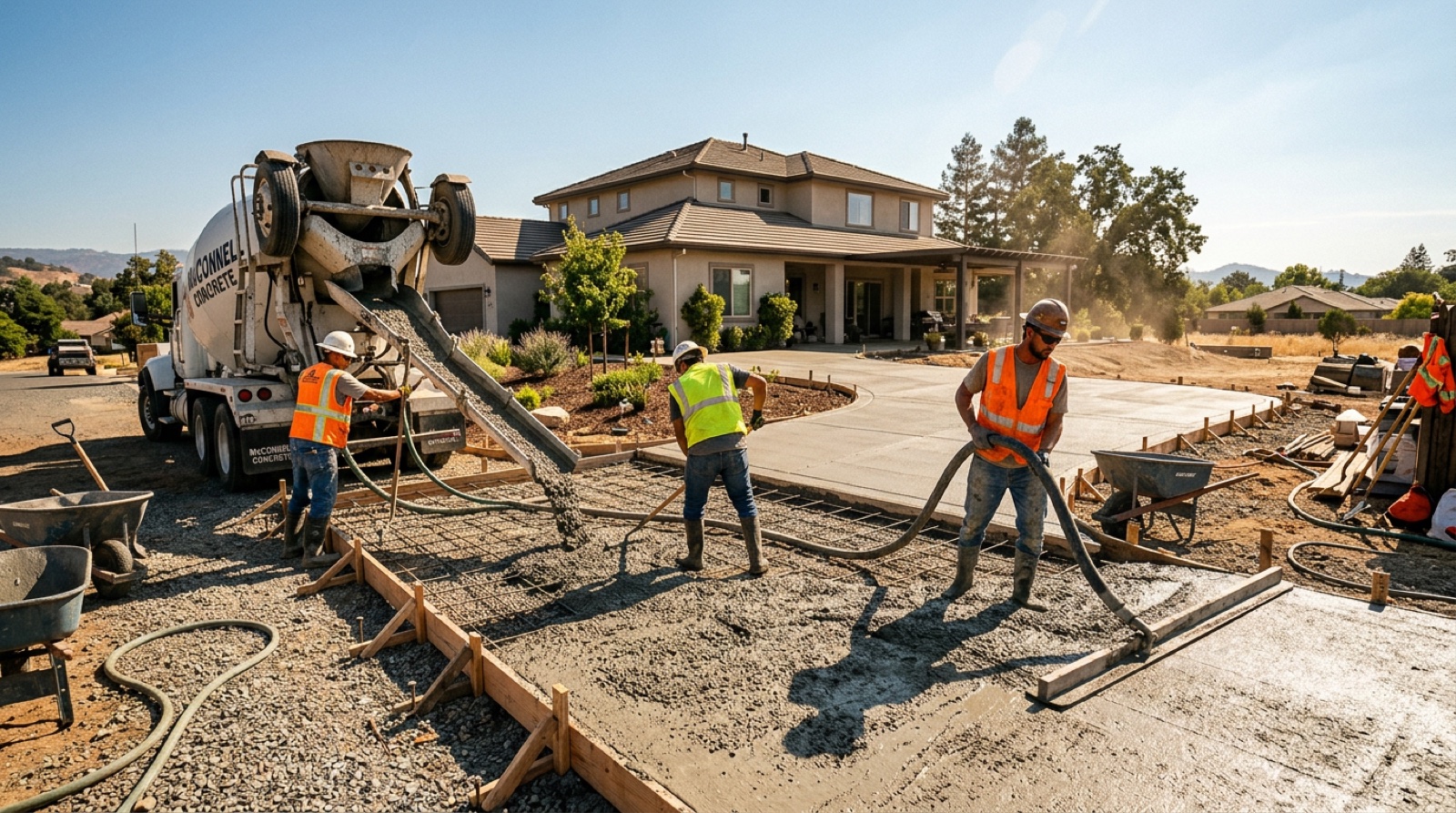
Pour concrete during a Redding heat wave and the biggest threat is not the sun on your skin. It is water leaving the mix too fast.
When surface moisture evaporates quicker than the concrete can bleed it back, you get plastic shrinkage cracks and a weaker finished slab. Timing and protection matter more in July than in almost any other month here.
The New York Times reported on July 15, 2026 that a weather shift is pushing unhealthy heat and higher wildfire risk across California. Redding routinely sits at the hot end of that range, so this is a practical concern, not a headline.
Why Heat Changes the Chemistry
Concrete does not dry. It cures through a chemical reaction called hydration, and that reaction needs water to stay in the mix.
Extreme heat, low humidity, and wind all pull that water out early. Lose it and the slab never reaches its designed strength.
You end up with a surface that looks finished but has a hidden weakness. Cracks show up weeks or months later, long after the crew has left.
The three conditions that make it worse
- Air temperature above 90 degrees, which Redding clears on most summer afternoons
- Dry wind moving across the fresh surface
- Direct sun on the slab during placement and the first hours of curing
Any one of these speeds up evaporation. Combine all three and the window for a clean finish gets very short.
How a Pour Should Be Handled in July
The fix is not complicated, but it has to be planned before the truck arrives. Good crews adjust the schedule and the method to the forecast.
Early morning pours are the standard move here. Starting at dawn puts the critical curing hours ahead of the afternoon peak.
| Step | Purpose |
|---|---|
| Pour early morning | Keeps the hottest hours out of the initial cure |
| Dampen the subgrade first | Stops dry ground from wicking water out of the mix |
| Use evaporation retarder | Slows surface moisture loss during finishing |
| Cover and wet cure | Holds moisture in for the first several days |
Wet curing is where a lot of driveways and patios are won or lost. Keeping the slab damp for the first few days lets hydration finish properly.
Skip it during a heat wave and you are gambling with the surface. This is one reason a planned driveway installation holds up better than a rushed one.
Where Redding Homeowners See the Damage
Flat, exposed surfaces take the worst of it. A wide slab with nothing shading it loses water fast across a large area.
That is why a backyard patio poured in the wrong conditions can craze or crack while a shaded foundation footing cures fine. The same logic applies to walkways and paths that run across open yards.
Decorative work carries extra risk. A stamped concrete surface needs consistent moisture to cure evenly, and heat can leave blotchy color or a weak imprint if the timing is off.
Existing concrete in the heat too
Heat does not only affect new pours. Concrete already in the ground expands and contracts with big temperature swings.
Redding summers followed by cool nights put real stress on older slabs. Small cracks widen, and that is often when a concrete repair becomes the smarter call before the damage spreads.
The Wildfire Angle Is Real Too
The same report flagged elevated wildfire risk alongside the heat. For homeowners in Shasta County, that is worth thinking about in the hardscape itself.
Concrete does not burn. A wide driveway, a paved side yard, or a poured pad can act as defensible space between vegetation and a structure.
Well built retaining walls and hardscaped zones also reduce the loose, flammable landscaping right against a home. It is not a fire plan on its own, but it is a durable piece of one.
What to Ask Before You Schedule
If you are planning any pour in Redding, Anderson, Shasta Lake, or Red Bluff this summer, the questions below tell you a lot.
- What time of day will the pour start?
- How will the slab be cured over the first several days?
- Is the mix or method being adjusted for the forecast?
A contractor who has a clear answer to each is planning around the heat, not ignoring it. That is the difference between a slab that lasts decades and one that fails early.
If you want a straight assessment of your project and a realistic timeline, reach out for a quote and we will walk you through it. Getting the timing right now saves you a repair bill later.